
Herbal Remedies for Sleep: The Honest 2026 Guide (9 Options)
If you lie awake at 2 a.m. scrolling your phone, listening to the fan and replaying the day, you are far from alone. Poor sleep is one of the most common complaints people bring to doctors in Pakistan, and plenty of us reach for a cup of chamomile, a strand of saffron or a capsule of ashwagandha long before we consider a sleeping pill. The big question is simple: do herbal remedies for sleep really work, or are they just tradition wrapped in good marketing?
The honest answer sits in the middle. Some herbs have encouraging research behind them. Others have a long history of use but thin or mixed evidence. A few carry real safety concerns that rarely appear on a product label. This guide separates the three groups so you can make a calm, informed decision.
We reviewed published research, including a 2021 systematic review on ashwagandha and guidance from the U.S. National Institutes of Health, and combined it with practical context for readers in Pakistan: hot summer nights, late chai, load-shedding, long screen hours and the schedule changes of Ramadan.
By the end, you will know which herbal remedies for sleep have the strongest support, how to use them sensibly, who should avoid them, and when a herb is simply the wrong tool for the job.
Important: This article is for education only. It is not medical advice and does not replace a consultation with a qualified doctor.
Key Takeaways
- Herbal remedies for sleep are best suited to mild, short-term sleep trouble, not long-term insomnia or untreated sleep disorders.
- Ashwagandha currently has the most encouraging human evidence, mainly for people with stress or insomnia who take it consistently for weeks.
- Chamomile and valerian are hugely popular, but major health agencies describe the evidence for insomnia as limited or inconclusive.
- Quality, dose and honest labelling matter as much as the herb itself, because supplement contents can vary widely.
- Pregnancy, liver or thyroid conditions, and regular use of sedatives or antidepressants all call for a doctor’s advice before using any herb.
- Daily habits such as consistent sleep times, early caffeine cut-off and a cool dark room usually do more than any capsule.
Why So Many People in Pakistan Struggle With Sleep
Sleep problems rarely have a single cause, and our daily environment plays a bigger role than most people realise. A few patterns come up again and again in Pakistani households:
- Heat and power cuts. Hot nights make it harder for the body to lower its core temperature, which is one of the signals your brain uses to start sleep. A fan or AC switching off suddenly can also wake you up.
- Late nights and screens. Dinner at 10 p.m., family gatherings that run past midnight and hours of social media in bed push bedtimes later, while bright screens can delay the natural rise of melatonin.
- Chai and caffeine timing. Caffeine has a half-life of roughly five to six hours in many adults, so a strong cup of doodh patti at 7 p.m. can still be active at midnight.
- Stress and financial pressure. Worry about work, rising prices and family responsibilities is one of the biggest drivers of racing thoughts at bedtime.
- Shift work and Ramadan. Night-shift workers, call-centre staff and students on exam schedules fight their body clock, and the change in eating and sleeping hours during Ramadan can disturb routines for weeks.
Because the causes differ, no single herb fixes every case. That is why understanding your own pattern should come before choosing herbal remedies for sleep.
Understanding Sleep Problems Before You Try Herbs
Insomnia means having trouble falling asleep, staying asleep or waking far too early, together with tiredness, low mood or poor concentration during the day. Doctors usually call it chronic when it happens at least three nights a week for three months or longer. Most adults need seven or more hours of sleep a night to function well.
It helps to identify which kind of problem you have:
- Trouble falling asleep. You lie in bed for 30 minutes or more with a busy mind. This is often linked to stress, caffeine or screen use.
- Trouble staying asleep. You wake several times and struggle to drift off again. Heat, noise, pain, alcohol-free restlessness, or a full bladder are common triggers.
- Early morning waking. You wake at 3 or 4 a.m. and cannot return to sleep. This can be associated with anxiety or low mood and deserves medical attention if it persists.
Sometimes poor sleep is a symptom of something else entirely. Obstructive sleep apnea (loud snoring with pauses in breathing), restless legs syndrome, an underactive or overactive thyroid, low iron levels, chronic pain, acid reflux, depression, anxiety and certain medicines can all disturb sleep. No herb will fix those underlying causes.
For chronic insomnia, the American College of Physicians recommends cognitive behavioural therapy for insomnia (CBT-I) as the first treatment to try. In that context, herbal remedies for sleep are best seen as gentle support for mild, occasional difficulty rather than a cure for a persistent condition.
How Herbal Remedies for Sleep Work
Plants contain hundreds of active compounds, and researchers are still working out which ones influence sleep. Most proposed explanations fall into four groups:
- Calming the nervous system. Compounds such as valerenic acid (valerian), apigenin (chamomile) and withanolides (ashwagandha) may interact with GABA, the brain’s main calming messenger, which is also the system targeted by many prescription sleep medicines.
- Lowering stress signals. Adaptogens like ashwagandha appear to reduce perceived stress and may influence cortisol, the hormone that keeps you alert when it stays high at night.
- Sensory relaxation. Aromatic herbs such as lavender work partly through scent, which can slow breathing and heart rate when paired with a bedtime routine.
- Ritual and expectation. A warm cup of herbal tea at the same time every night teaches your brain that the day is ending. This effect is real, even if some of it is psychological, and it is perfectly valid to use.
The effects of most plants are mild and build gradually. That is very different from a sedative that forces sleep within an hour, and it is one reason herbal remedies for sleep work best when combined with good sleep habits.
Herbal Remedies for Sleep: What the Evidence Really Says
Before choosing a herb, it is worth knowing how much proof exists. Here is where the science stands today.
A 2021 systematic review and meta-analysis in PLOS ONE pooled five randomized trials with 400 participants and found that ashwagandha extract had a small but significant effect on overall sleep. The effect was stronger in adults with insomnia, at doses of 600 mg a day or more, and when taken for at least eight weeks. You can read the study on PubMed Central.
The picture is less clear for other popular plants. The U.S. National Center for Complementary and Integrative Health (NCCIH) states that herbs such as valerian, chamomile and kava have not been shown to be effective for insomnia, and raises safety concerns about some of them. The NIH Office of Dietary Supplements calls the evidence for valerian’s sleep effects inconclusive.
That does not mean these herbs are useless. Many people report feeling calmer and sleeping better, and small studies exist. It means the research is mixed, sample sizes are small and results depend heavily on the product used. We will flag the strength of evidence for every herb below so you know exactly what to expect.
9 Herbal Remedies for Sleep, Ordered by Strength of Evidence
Each herb below includes its common local name, what research suggests, practical use and key cautions. Evidence ratings are our own plain-language summary, not a guarantee of results.
1. Ashwagandha (Asgandh): Best Evidence So Far
Ashwagandha (Withania somnifera) is a root used in Ayurveda and Unani traditions to support strength and calm. Its name for sleep is fitting: the species name somnifera means sleep-inducing.
Evidence: moderate, and the strongest on this list. Besides the 2021 meta-analysis above, trials have reported improvements in self-rated sleep quality and reduced anxiety in stressed adults. Most studies used standardized root extracts in the range of 300 to 600 mg a day for several weeks, and the authors noted that no serious side effects were reported. Keep in mind that most trials relied on questionnaires rather than sleep-lab measurements.
How people use it: capsules or tablets with a standardized extract, usually taken in the evening with food. Benefits, if any, tend to appear after two to eight weeks, not after one night.
Cautions: avoid in pregnancy. Speak with a doctor first if you have a thyroid condition, an autoimmune disease, liver problems or take sedatives, blood-pressure or diabetes medicines. Rare cases of liver injury have been reported, so stop and seek care if you notice yellow eyes or skin, dark urine or severe tiredness.
2. Chamomile (Babuna): The Gentle Bedtime Classic
Chamomile (Matricaria chamomilla) is probably the most familiar of all herbal remedies for sleep. Babuna tea has been used in Unani practice for generations to ease stomach discomfort and restlessness.
Evidence: limited and mixed. One small trial in older adults suggested better sleep quality, while another in people with insomnia found no clear effect. NCCIH lists chamomile among herbs not proven to treat insomnia. Its most reliable benefit may be the calming ritual of a warm drink and mild relief of digestive discomfort that can disturb sleep.
How people use it: one tea bag or one to two teaspoons of dried flowers steeped, covered, for five to ten minutes, around 45 to 60 minutes before bed.
Cautions: chamomile belongs to the daisy family, so people allergic to ragweed, daisies or marigolds can react. It may also interact with blood thinners such as warfarin. Pregnant women should check with their doctor first.
3. Valerian Root (Tagar or Mushk-e-Bala): Popular but Inconclusive
Valerian root, from plants in the Valeriana genus, has been used for centuries in Europe and South Asia. In Pakistani herbal markets it is often sold as Tagar or Mushk-e-Bala, and names such as Sumbul-ut-Teeb sometimes overlap with related plants, so always check the Latin name on the pack.
Evidence: inconclusive. Some trials report shorter time to fall asleep, and others show no benefit over placebo. The NIH Office of Dietary Supplements summarizes the evidence as inconclusive, and the Mayo Clinic notes that results are not consistent across studies.
How people use it: capsules or tinctures taken 30 to 60 minutes before bed. The smell is strong and earthy, which many people dislike.
Cautions: avoid in pregnancy and breastfeeding and in children under three. It can add to the drowsiness caused by alcohol, sleeping pills and some anxiety medicines. People with liver disease should avoid it. Product contents can vary, so choose reputable brands. See also the NCCIH page on valerian.
4. Lemon Balm (Badranjboya): Calm for a Busy Mind
Lemon balm (Melissa officinalis) is a mint-family herb known in Unani medicine as Badranjboya. It has a light lemony scent and a long reputation for easing nervous tension.
Evidence: limited. Small studies suggest it may reduce anxiety and mild sleep disturbance, and it is frequently combined with valerian in research, which makes its individual effect hard to isolate. Think of it as a mild helper for an overactive mind rather than a strong sleep inducer.
How people use it: as a tea (one to two teaspoons of dried leaves in hot water for ten minutes) or in capsules. It blends well with chamomile.
Cautions: laboratory studies suggest it may influence thyroid activity, so people on thyroid medication should ask their doctor first. It may also add to the effect of sedatives.
5. Passionflower: Short-Term Support for Racing Thoughts
Passionflower (Passiflora incarnata) is a climbing vine used in Western herbal medicine for nervousness and restlessness.
Evidence: limited but interesting. A small trial of passionflower tea in healthy adults reported improved self-rated sleep quality over one week, and some studies show reduced anxiety. Larger and longer trials in people with diagnosed insomnia are still lacking.
How people use it: tea or capsules in the evening, often combined with chamomile or lemon balm.
Cautions: avoid during pregnancy because it may stimulate the uterus. Combining it with sedatives, antidepressants or alcohol may increase drowsiness.
6. Lavender (Ustukhudus): Aroma for Wind-Down Time
Lavender (Lavandula angustifolia, and the related Lavandula stoechas, known as Ustukhudus in Unani texts) is best known for its scent.
Evidence: limited but consistent for aroma. Several small studies found that inhaling lavender at bedtime modestly improved self-reported sleep quality, especially in people with mild anxiety. Standardized oral lavender oil has been studied for anxiety, but this is a pharmaceutical-style preparation, not the same as essential oil from a bottle.
How people use it: a few drops of diluted essential oil on a tissue or pillow-side diffuser, or a small dried-lavender sachet. Never swallow essential oil unless a qualified practitioner has prescribed a specific product.
Cautions: can cause skin irritation if applied undiluted. Some people get headaches from strong scents. Keep oils away from children and pets.
7. Jatamansi (Balchhar): Traditional Favourite, Thin Evidence
Jatamansi (Nardostachys jatamansi), also called spikenard, is a Himalayan root used in Ayurveda and Unani practice for stress, restlessness and sleeplessness. Local names vary, and it is sometimes confused with valerian species, so rely on the Latin name when buying.
Evidence: mostly traditional and preclinical. Animal and laboratory studies suggest calming effects, but good human trials on sleep are scarce. It deserves honest labelling as a traditional herb with promising but unproven potential.
Sustainability note: the plant is considered threatened in the wild because of over-harvesting. If you use it, choose suppliers that can show responsible, legal sourcing.
Cautions: may cause drowsiness and digestive upset. Avoid in pregnancy unless advised by a doctor, and avoid combining with sedatives.
8. Saffron (Zafran): Small Trials, Real Promise
Saffron (Crocus sativus) is the world’s most expensive spice and a staple of Pakistani kitchens, from kheer to biryani.
Evidence: early but encouraging. Small randomized trials using standardized saffron extracts reported improved sleep quality in adults with mild sleep complaints. These studies used measured extract doses, not a casual pinch in milk, so the culinary habit may offer comfort but not necessarily the same effect.
How people use it: a few threads soaked in warm milk in the evening is a traditional and pleasant ritual. Extracts should follow label directions.
Cautions: large amounts can be unsafe in pregnancy. Saffron is frequently adulterated with dyed fibres, so buy from trusted sellers and look for deep red threads that colour water slowly and carry a floral aroma.
9. Jujube (Unnab): A Traditional Nighttime Fruit
Jujube (Ziziphus jujuba), known locally as Unnab, is a fruit eaten fresh or dried across South Asia. Related seeds from the Ziziphus family are widely used in traditional Chinese medicine for restless sleep.
Evidence: preliminary. Laboratory and small human studies are encouraging but not conclusive. Dried unnab is also a healthy snack rich in fibre, so there is little downside to enjoying a few in the evening.
How people use it: a few dried fruits as an evening snack, or a simmered tea made from the fruit.
Cautions: people with diabetes should watch portion size because of natural sugars. It may add to the effects of sedative medicines.
Quick Comparison Table
| Herb | Local name | Evidence for sleep | Common form | Main caution |
|---|---|---|---|---|
| Ashwagandha | Asgandh | Moderate | Capsules | Pregnancy, thyroid, liver |
| Chamomile | Babuna | Limited, mixed | Tea | Daisy-family allergy |
| Valerian | Tagar | Inconclusive | Capsules, tincture | Pregnancy, liver, sedatives |
| Lemon balm | Badranjboya | Limited | Tea, capsules | Thyroid medicines |
| Passionflower | Passiflora | Limited | Tea, capsules | Pregnancy, sedatives |
| Lavender | Ustukhudus | Limited (aroma) | Aroma, sachet | Skin irritation |
| Jatamansi | Balchhar | Traditional only | Powder, capsules | Sourcing, pregnancy |
| Saffron | Zafran | Early, promising | Milk, extract | Adulteration, pregnancy |
| Jujube | Unnab | Preliminary | Dried fruit | Sugar content |
Safety, Side Effects and Drug Interactions of Herbal Remedies for Sleep
“Natural” does not automatically mean “safe.” Herbs are active substances, and the same compounds that relax you can interact with medicines or affect certain health conditions. Keep these points in mind before you start any of the herbal remedies for sleep described above.
Common mild side effects include morning grogginess, stomach upset, headache, vivid dreams and, less often, skin rashes. If a herb makes you feel worse, stop using it.
Please speak with a doctor or pharmacist first if you:
- are pregnant, planning pregnancy or breastfeeding;
- are giving anything to a child or teenager;
- have liver, kidney or thyroid disease, or an autoimmune condition;
- take sleeping pills, anti-anxiety medicines, antidepressants, blood thinners, diabetes or blood-pressure medicines;
- are scheduled for surgery, since some herbs can affect anaesthesia and bleeding;
- drink alcohol regularly, which can strengthen sedative effects.
Start with one herb at a time and use the lowest labelled amount for a couple of weeks. Introducing three or four products together makes it impossible to know what is helping or causing side effects.
Also remember that most studies last only a few weeks to a few months. Long-term safety data for many herbs is limited, so avoid open-ended daily use without a periodic check-in with your doctor.
Sleep Products and Herbs to Avoid
Not everything marketed for sleep deserves a place in your cupboard. Be especially careful with the following:
- Kava. NCCIH has raised safety concerns about kava, including reports of liver damage. Most doctors advise steering clear.
- Unregistered “neend ki dawai” and powders. Regulators in several countries have repeatedly found relaxation and sleep products containing undeclared pharmaceutical drugs. A product with no manufacturer details, no batch number and miraculous claims is a red flag.
- Opium-derived preparations such as poppy husk (post). These are addictive, dangerous and unsuitable as a sleep aid under any circumstances.
- Large amounts of nutmeg (jaiphal). A pinch in milk is a kitchen tradition, but high amounts can cause nausea, dizziness, confusion and hallucinations.
- Alcohol as a nightcap. It may help you doze off but fragments sleep later in the night.
Simple Evening Routines Using Herbal Remedies for Sleep
Small rituals work better than complicated recipes. Here are three easy options that fit Pakistani homes and kitchens.
1. Gentle chamomile and lemon balm tea. Steep one teaspoon of dried chamomile and one teaspoon of dried lemon balm in a covered cup of just-boiled water for ten minutes. Strain, sip slowly and keep the lights low.
2. Saffron milk, the mild way. Soak two or three saffron threads in a spoonful of warm water, then stir into a cup of warm (not boiling) milk. Skip heavy sugar and avoid it if you have a milk intolerance.
3. Lavender pillow ritual. Place a small dried-lavender sachet near, not under, your pillow, or put two drops of diluted oil on a tissue by the bedside. Pair it with five minutes of slow breathing.
A useful pattern is the 60-minute wind-down: dim lights, put the phone in another room, sip your tea, write tomorrow’s to-do list on paper so your mind can let go, then go to bed. Doing the same steps nightly is what teaches your brain it is time to sleep, and that signal strengthens whichever herbal remedies for sleep you choose.
Habits That Make Herbal Remedies for Sleep Work Better
Even the best herb struggles against poor habits. These changes have strong support from sleep specialists and often matter more than any supplement:
- Keep fixed sleep and wake times, including weekends, so your body clock stays steady.
- Set a caffeine curfew. Aim to finish chai, coffee, cola and energy drinks at least eight hours before bed.
- Cool and darken the room. A cooler bedroom, blackout curtains and a fan or AC on a timer help during Pakistani summers.
- Get morning light. Ten to twenty minutes of daylight within an hour of waking anchors your circadian rhythm.
- Move your body. Regular exercise improves sleep, but finish intense workouts a few hours before bed.
- Use the 20-minute rule. If you cannot sleep after about 20 minutes, get up, do something quiet in dim light and return when drowsy. Staring at the clock makes things worse.
- Eat dinner earlier and lighter. Heavy, spicy or very late meals can trigger reflux and restlessness.
- Reduce screens before bed. Social media and news keep the brain switched on.
If you are still struggling after a few weeks, cognitive behavioural therapy for insomnia (CBT-I) is the best-supported next step, and many therapists now offer it online.
How to Choose Quality Herbal Sleep Products
Because supplements are not tested like prescription drugs, quality varies. When buying herbal remedies for sleep, check the following:
- Latin name and plant part. The label should say exactly what is inside, for example Withania somnifera root extract rather than just “herbal blend.”
- Standardized extract and clear dose. Look for milligrams per capsule and the extract ratio or active-compound percentage.
- Manufacturer details, batch number and expiry date. Missing information is a warning sign.
- Realistic claims. Avoid anything that promises to cure insomnia permanently.
- Fresh, properly stored herbs. Dried flowers and leaves should smell aromatic, not musty or dusty.
- Third-party testing where available, for purity and contaminants.
Transparency note: we sell natural health products, so we are not neutral. That is exactly why we have written this guide to be balanced and to say plainly when the evidence is weak. You can explore our natural health range at Multiversal Pure or start from the multiversal.pk homepage. Whatever you buy, from us or anyone else, apply the checklist above.
When to See a Doctor About Sleep Problems
Herbal remedies for sleep are not the right tool for every situation. Book an appointment if:
- your sleep trouble lasts longer than three months or happens at least three nights a week;
- you snore loudly, gasp or stop breathing during sleep, or fall asleep unintentionally during the day;
- you feel persistently sad, anxious or hopeless;
- you have unrefreshing sleep along with leg discomfort, chest pain, breathlessness or unexplained weight change;
- you rely on any sleep aid, herbal or otherwise, every night and cannot sleep without it;
- you have thoughts of harming yourself. In that case, please contact a doctor or a trusted person immediately.
A doctor can check for treatable causes such as thyroid problems, iron deficiency or sleep apnea, and can guide you towards CBT-I or other proven treatment.
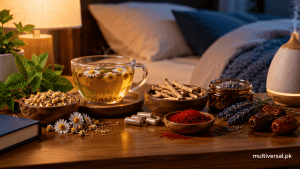
نیند کے لیے جڑی بوٹیاں | Herbal Remedies for Sleep in Urdu
نیند نہ آنے کے مسئلے میں سب سے پہلے اپنی عادات پر توجہ دیں: سونے اور جاگنے کا وقت مقرر کریں، شام کے بعد چائے اور کافی سے پرہیز کریں اور سونے سے پہلے موبائل کا استعمال کم کریں۔
جڑی بوٹیاں جیسے اشوگندھا (اسگند)، بابونہ، بادرنجبویہ، زعفران اور جٹامانسی ہلکی پھلکی نیند کی مشکل میں مددگار ہو سکتی ہیں، لیکن سائنسی شواہد ہر جڑی بوٹی کے لیے مختلف ہیں۔ حاملہ اور دودھ پلانے والی خواتین، بچوں، جگر یا تھائرائیڈ کے مریضوں اور نیند یا ڈپریشن کی دوائیں لینے والے افراد کسی بھی جڑی بوٹی کو شروع کرنے سے پہلے ڈاکٹر سے مشورہ ضرور کریں۔
اگر نیند کا مسئلہ تین ماہ سے زیادہ رہے، خراٹے یا سانس رکنے کی شکایت ہو، یا دن میں شدید نیند آئے تو معالج سے رجوع کریں۔
Frequently Asked Questions About Herbal Remedies for Sleep
Which herb is best for sleep?
There is no single best herb for everyone. Ashwagandha has the strongest human evidence, especially for people with stress or insomnia who use a standardized extract for at least several weeks. Chamomile, lemon balm and lavender are gentler options for relaxation and bedtime routine. The best choice depends on your health, medicines and the type of sleep problem you have.
Is ashwagandha safe to take every night?
Trials generally ran for around eight to twelve weeks and reported no serious side effects in healthy adults, but long-term safety data is limited. Avoid it in pregnancy, and ask a doctor first if you have thyroid, liver or autoimmune conditions or take sedatives. Stop and seek medical advice if you develop signs of liver trouble such as yellowing of the eyes or skin.
How long do herbal sleep remedies take to work?
A warm tea may feel relaxing the same evening, but most herbs studied for sleep, including ashwagandha, showed effects only after two to eight weeks of consistent use. If you notice nothing after about a month at the labelled dose, it is reasonable to stop and review other causes with your doctor.
Is chamomile tea enough to cure insomnia?
No. Chamomile tea can be a soothing part of a bedtime routine, but health agencies state that it has not been proven to treat insomnia. Persistent insomnia needs proper assessment and often CBT-I.
Can I combine herbal remedies for sleep with sleeping pills or antidepressants?
Only with medical supervision. Many herbs have mild sedative effects that can add to prescription medicines, causing excessive drowsiness, dizziness or other interactions. Ask your doctor or pharmacist before combining anything.
Are herbal sleep aids safe for children and pregnant women?
Generally they should not be used without medical advice. Safety data in pregnancy, breastfeeding and young children is limited, and several herbs, including valerian, passionflower and high doses of saffron, are not recommended in some of these situations. For children, focus on a consistent bedtime routine and consult a paediatrician.
What is the best time to take herbal remedies for sleep?
Teas are usually taken 45 to 60 minutes before bed. Capsules and tinctures are often taken 30 to 60 minutes before bed, or as the label directs. Always follow the product instructions and avoid exceeding the stated dose.
Can herbal sleep remedies cause dependence?
Most commonly studied herbs are not considered habit-forming in the way some prescription sedatives can be. However, relying on any sleep aid every night can create a psychological dependence on the routine. If you feel unable to sleep without it, speak with a healthcare professional.
Final Thoughts on Herbal Remedies for Sleep
The most honest summary is this: herbal remedies for sleep can be a helpful, gentle part of a larger plan, but they are rarely the whole answer. Ashwagandha has the best research so far, saffron and passionflower look promising, chamomile and lavender are lovely for winding down, and traditional herbs like jatamansi and unnab deserve respect but more science.
Choose one herb, buy a quality product, follow the dose, give it a few weeks and keep your daily habits in order. If sleep still does not improve, that is not a personal failure. It is a signal to look deeper with a doctor.
Would you like help choosing quality natural products for your evening routine? Visit multiversal.pk to browse our range, and share this guide with someone who needs a better night’s sleep.
Medical disclaimer: This article is for informational purposes only and is not a substitute for professional medical advice, diagnosis or treatment. Herbal products are not intended to diagnose, treat, cure or prevent any disease. Always consult a qualified healthcare provider before starting any supplement, especially if you are pregnant, breastfeeding, have a medical condition or take medicines.
References and Further Reading
- Cheah KL et al. Effect of Ashwagandha (Withania somnifera) extract on sleep: a systematic review and meta-analysis. PLOS ONE, 2021. PubMed Central
- NIH Office of Dietary Supplements. Valerian: Fact Sheet for Health Professionals
- NCCIH. Valerian
- NCCIH Clinical Digest. Myth-busting popular natural products marketed for disease prevention and wellness
- Mayo Clinic. Valerian: A safe and effective herbal sleep aid?